Published on: August 3, 2026
Human trafficking remains one of the gravest human rights violations affecting women, men, and children in Uganda. At the same time, it has become one of the world’s most profitable criminal enterprises, exploiting vulnerable people for financial gain.
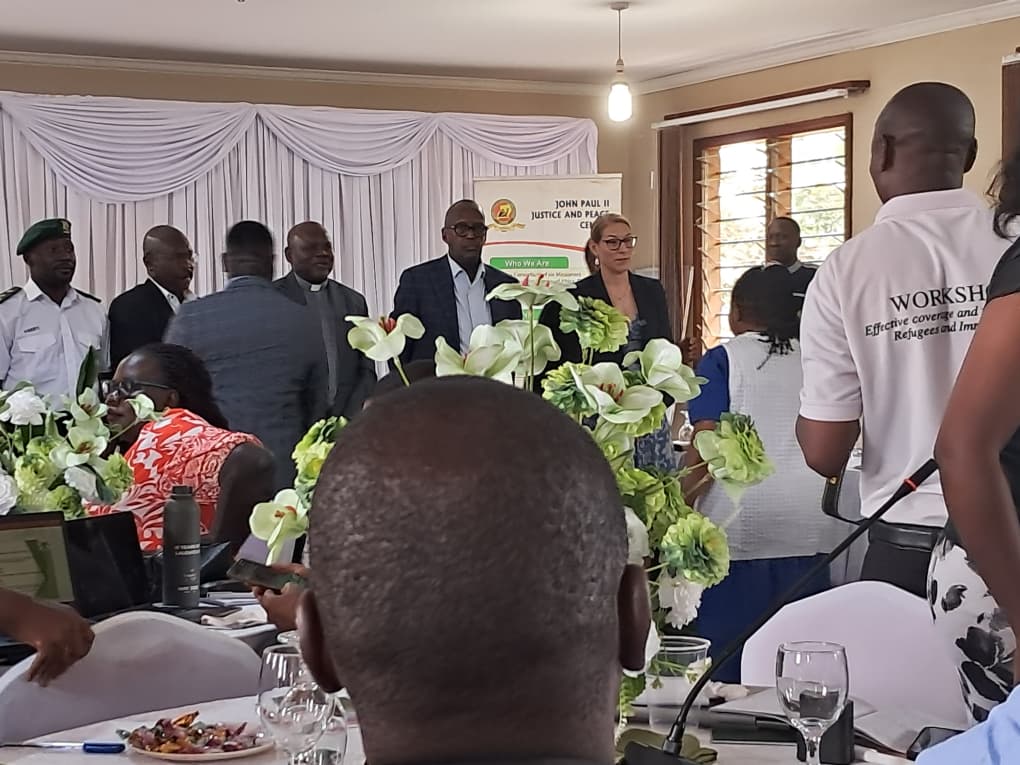
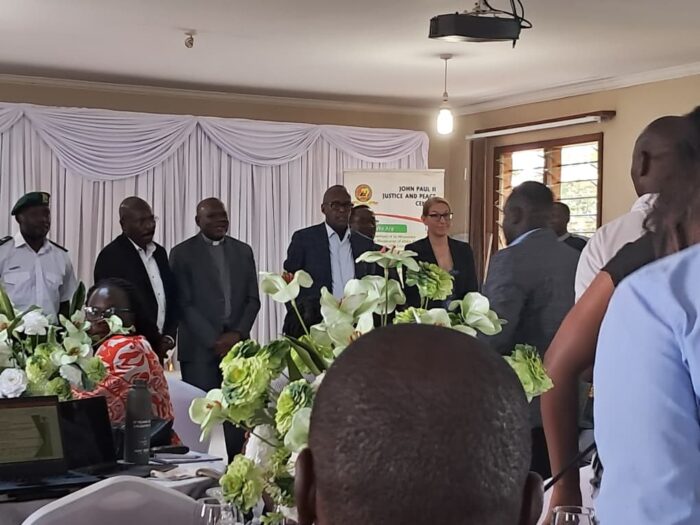
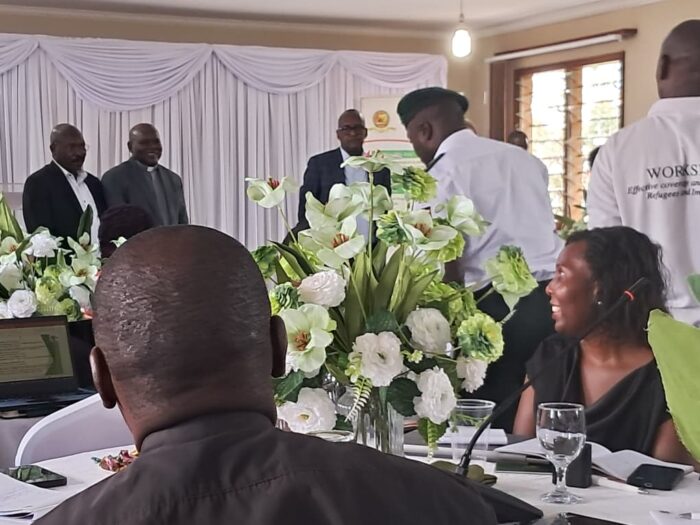
On 24 July 2026, the John Paul II Justice and Peace Centre convened a national multi-stakeholder dialogue on combating trafficking in persons in Uganda at their offices in Nsambya, Kampala. The Foundation for Human Rights Initiative (FHRI) participated in the meeting alongside representatives from government, religious organizations, civil society, development partners, and law enforcement agencies.
The dialogue, held under the theme “United Action against Human Trafficking: Strengthening Prevention, Protection and Partnerships,” brought together key actors in the fight against human trafficking. The event was officiated by the Minister of Gender, Labour and Social Development, Hon. Henry Tumukunde, and the Minister of State for Gender, Labour and Social Development (Labour, Employment and Industrial Relations)-Hon. Simon Mulongo,
Organised ahead of the International Day Against Trafficking in Persons, commemorated annually on 30 July, the dialogue sought to identify practical and sustainable strategies for preventing human trafficking while strengthening protection mechanisms and partnerships among stakeholders across Uganda.
Participants noted that human trafficking affects people of all ages but disproportionately targets women, young adults, and children. Victims are often deceived through fraudulent recruitment agencies, fake employment opportunities, false education offers, and increasingly through digital platforms. Many are trafficked both within Uganda and across borders, particularly to countries in the Middle East and parts of Asia.
Trafficked persons are subjected to various forms of exploitation, including forced labour, sexual exploitation, organ harvesting, online scam operations, recruitment into organised criminal or militia groups, child soldiering, and exploitative reproductive practices such as forced surrogacy. Children are particularly vulnerable and were reported to constitute nearly 80 percent of identified victims.
One of the key objectives of the dialogue was to strengthen coordination among institutions responsible for combating trafficking. This echoed the Minister’s call for a united national response to dismantle trafficking networks and protect vulnerable Ugandans from criminal syndicates that prey on innocent people.
Stakeholders identified several drivers of human trafficking, including poverty, unemployment, inadequate public awareness, limited access to education, weak social protection systems, and cultural barriers. Survivors also face significant challenges after rescue, including stigma, limited rehabilitation and reintegration support, and inadequate economic opportunities. In some cases, parents unknowingly become accomplices in trafficking due to misinformation or economic hardship.
Although comprehensive national statistics remain limited, victims have been identified in countries including Cambodia, Myanmar, India, and the United Arab Emirates. Participants also highlighted the Philippines as a country whose experiences in combating human trafficking offer valuable lessons for Uganda.
Addressing the meeting, Hon. Henry Tumukunde described human trafficking as a modern form of slavery and reaffirmed the Government’s commitment to intensifying efforts against the crime both within Uganda and through cross-border cooperation. He noted that Uganda serves as a country of origin, transit, and destination for trafficked persons, making regional collaboration essential.
The Minister revealed that reported trafficking cases had increased dramatically from 125 cases in 2016 to 1,002 cases in 2025, underscoring the growing scale of the problem.
He called for stronger collaboration among all stakeholders, particularly the Uganda Police Force, the Ministry of Gender, Labour and Social Development, and the Ministry of Internal Affairs, to implement practical and coordinated interventions to curb trafficking. He warned that the continued rise in trafficking could further affect Uganda’s international standing and emphasized the need for urgent action to reverse the trend.
Participants concluded that combating human trafficking requires a whole-of-society approach involving government institutions, civil society organisations, faith-based organisations, communities, the private sector, and international partners. Strengthened prevention, effective protection of survivors, prosecution of traffickers, and enhanced partnerships remain critical to safeguarding the rights and dignity of all Ugandans.
Written by: Ms. Elizabeth Nantamu